4×
Double weaknesses
2 attacking types
Ice/Rock
Combined weaknesses, resistances, and roster entries for the Ice and Rock defending pair
Ice and Rock combine by multiplying each attacking type's effectiveness against both defending types. Fighting and Steel deal 4x damage, while Water, Grass, Ground, and Rock deal 2x. Normal, Ice, Poison, and Flying are resisted at 0.5x. Pokemon Champions entries with exactly this pair and related type swaps complete the profile.
Understand how combined Ice and Rock typing multiplies incoming attack effectiveness across the complete type chart.
Each attacking type's effectiveness against Ice and Rock is multiplied to determine total incoming damage. Shared weaknesses stack to 4x, while a weakness and a resistance cancel to neutral 1x. The groups below document double weaknesses, standard weaknesses, resistances, and intentionally listed neutral attacks. This breakdown reflects the base type chart only, excluding abilities, items, weather, or field effect modifiers.
2 attacking types
4 attacking types
4 attacking types
0 attacking types
No attacking type lands in this multiplier group.
0 attacking types
No attacking type lands in this multiplier group.
8 attacking types
These values describe the base type chart only. Abilities, moves, items, and field effects can change how an individual battle resolves.
See how changing one member of this pair shifts the complete incoming-damage profile and roster representation.
Each linked dual-type profile below retains either Ice or Rock while substituting the partner type. Reviewing these nearby combinations shows how a single type change can transform the complete incoming-damage profile. Sharing one type does not guarantee a similar full matchup outcome. Both currently represented combinations and valid empty typings function as precise research destinations for type-chart analysis.
2 roster entries
Flying/Rock Matchup Profile
2 roster entries
Grass/Ice Matchup Profile
2 roster entries
Ice/Fighting matchup profile
2 roster entries
Ice/Ghost Type Matchup Profile
2 roster entries
Poison/Rock Matchup Profile
2 roster entries
Rock/Dark Defensive Matchup Profile
2 roster entries
Rock/Steel Matchup Profile
1 roster entries
Bug/Rock Type Matchup Profile
1 roster entries
Electric/Ice Matchup Profile
1 roster entries
Fighting/Rock Matchup Profile
1 roster entries
Fire/Rock Type Matchup Profile
1 roster entries
View the Ground/Rock matchup profile
Replacing Ice or Rock shifts the incoming-damage profile. See which weaknesses and resistances change in adjacent combinations, and compare profiles to understand why some pairs stay fragile while others gain flexibility across Pokemon Champions.
Explore roster representation for the dual Ice and Rock combination, regardless of type order.
An exact match requires both Ice and Rock, treating each type equally without a primary or secondary hierarchy. The results below display current Champions entries carrying this specific dual typing. Shared defensive matchups do not make these Pokemon interchangeable, as individual stats, abilities, and moves shape distinct roles. If no entries appear, the type-chart profile remains available for matchup analysis.
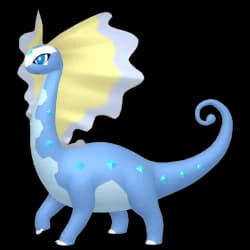
Aurorus offers a specialized Rock and Ice type profile, characterized by significant health reserves and a regal, tundra-based aesthetic. Examination of its stat distribution and biological behavioral traits helps players evaluate its role in team composition and understand the environmental impact of its freezing capabilities.
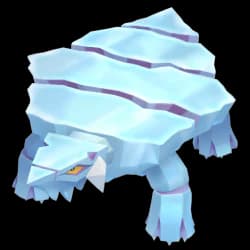
Hisuian Avalugg offers a high-utility physical defense profile for players navigating Pokemon Champions. Examining the base statistics and elemental typing helps define appropriate battle roles and potential team synergies centered around this Ice and Rock species.